
One of the Most Influential Faces in Bodybuilding
James “Flex” Lewis is widely regarded as the most dominant athlete in the history of the IFBB Pro League’s 212 bodybuilding division. Born on November 15, 1983, in Llanelli, Wales, Lewis transformed himself from an undersized rugby player into a seven-time Mr. Olympia 212 Champion, forever changing how weight-class bodybuilding is viewed.
Known globally as “The Welsh Dragon,” Flex Lewis became the gold standard for muscle density, symmetry, conditioning, and professionalism. His reign from 2012 to 2018 wasn’t just dominant—it was methodical, calculated, and nearly flawless.
Our team at Generation Iron is going to break it down.
| Full Name: Flex Lewis (212 Bodybuilder) | ||
| Weight | Height | Date Of Birth |
| 205-212 lbs | 5’5″ | 11/15/1983 |
| Division | Era | Nationality |
| 212 | 2010s | American |
Early Life and Path to Bodybuilding

Before bodybuilding, Flex Lewis was deeply involved in rugby, a sport that helped build his competitive mindset and physical toughness. At just 5’5”, Lewis quickly realized that traditional sports limited his ceiling, but bodybuilding offered a platform where structure, aesthetics, and discipline could be maximized.
He began weight training seriously in his late teens and competed in his first bodybuilding show at just 19 years old. Early success at the amateur level in the UK and Europe quickly marked him as a rising talent.
In 2007, Lewis made a life-altering move to the United States, immersing himself in the epicenter of professional bodybuilding. Training at elite gyms and learning from experienced coaches accelerated his development, refining his already impressive genetics.
Competitive Career Highlights
Flex Lewis’ competitive resume is among the most impressive in bodybuilding history:
- 7x Mr. Olympia 212 Champion (2012–2018)
- Arnold Classic 212 Champion
- Multiple IFBB Pro victories worldwide
- One of the longest title streaks in modern bodybuilding
What separated Lewis from his competitors wasn’t just muscle—it was consistency. Year after year, he arrived at the Olympia in peak condition, often looking better than the year before.
Physique Breakdown: Why Flex Lewis Was Untouchable
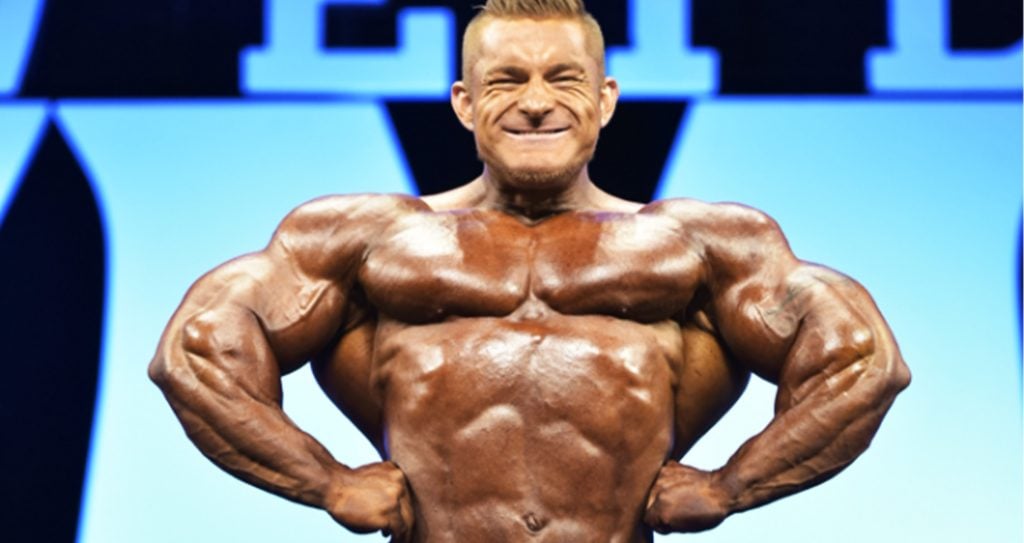
Flex Lewis’ physique was built for the 212 division:
- Thick, defined muscle bellies
- Exceptional back detail and width
- Full, capped delts
- Dense legs with deep separation
- Tight waist and classic lines
Even against taller competitors, Lewis appeared bigger due to his muscle maturity and three-dimensional look. His ability to fill out the 212 weight cap without sacrificing conditioning became one of his greatest competitive advantages.
Flex Lewis Training Philosophy
Flex Lewis trained with a mindset rooted in old-school bodybuilding, but refined with modern science. His approach emphasized:
- Targeting the muscle with each motion
- Focused intensity during workouts
- Staying away from ego lifting
Typical Training Split

Flex typically trained 5–6 days per week, adjusting volume based on contest prep or off-season phases.
Exercise Selection & Volume
Flex Lewis favored compound movements early in workouts, followed by isolation exercises to fully exhaust the muscle. His typical sessions lasted between 75 and 120 minutes, aimed at maximizing muscle stimulus.
Example Chest Session:
- Incline barbell press – 4 sets of 6–10
- Flat dumbbell press – 4 sets of 8–12
- Hammer strength press – 3–4 sets
- Cable flyes – 4 sets of 12–15
- High-rep finisher or drop set
Total working sets per body part often ranged from 15–25 sets, depending on recovery and training phase.
Advanced Training Techniques
Flex frequently incorporated:
- Supersets
- Drop sets
- Pause reps
These techniques enhanced muscle density and stage control, especially critical in the 212 division where detail matters.
Cardio & Conditioning Strategy
Cardio was used strategically rather than excessively.
- Off-season: Minimal cardio for heart health
- Pre-contest: 5–6 sessions per week
- Duration: 20–45 minutes per session
Flex preferred steady-state cardio to preserve muscle while achieving the dry, grainy look he was known for on stage.
Flex Lewis Diet Philosophy
Nutrition was where Flex Lewis truly separated himself. His diet was structured, precise, and brutally consistent. Rather than extreme fluctuations, Lewis relied on:
- Measured portions
- Clean protein and other food sources
- Gradual carb manipulation
- Long-term consistency
Staying within the 212 weight limit required year-round discipline, not last-minute cuts.
Macronutrient Approach (Approximate)
Protein intake remained high year-round to preserve muscle mass, ensuring he was always prepared for competition.
Sample Daily Meal Plan
Meal 1 – Breakfast
- Egg whites + whole eggs
- Oatmeal or cream of rice
- Fruit
Meal 2
- Lean protein source
- Complex carbohydrate
Meal 3 – Pre-Workout
- Lean protein
- Easily digestible carbs
Intra-Workout
- EAAs or amino acids
- Electrolytes
Meal 4 – Post-Workout
- Protein shake with simple carbs
Meal 5
- Protein source with veggies
Meal 6 – Evening
- Lean protein + healthy fats
Water intake was extremely high, often exceeding 1.5–2 gallons per day.
Supplement Strategy
Flex Lewis used supplements to support—not replace—his nutrition, focusing on:
- Protein powders
- Vitamins and minerals
- Pre-workout formulations
Retirement, Coaching, and Legacy
After retiring from the 212 division, Flex Lewis transitioned into:
- Coaching and athlete mentorship
- Business ownership and gym development
- Media, education, and brand leadership
His influence is still felt throughout the 212 division, with many modern competitors modeling their physiques and preparation strategies after Lewis’ blueprint.
Why Flex Lewis Is a Bodybuilding Icon
Flex Lewis proved that bodybuilding greatness isn’t about height or raw size—it’s about precision, discipline, and execution. His reign redefined what was possible in weight-class bodybuilding and set a standard that may never be matched.
Let us know in the comments below. Also, be sure to follow Generation Iron on Facebook, Twitter, and Instagram.